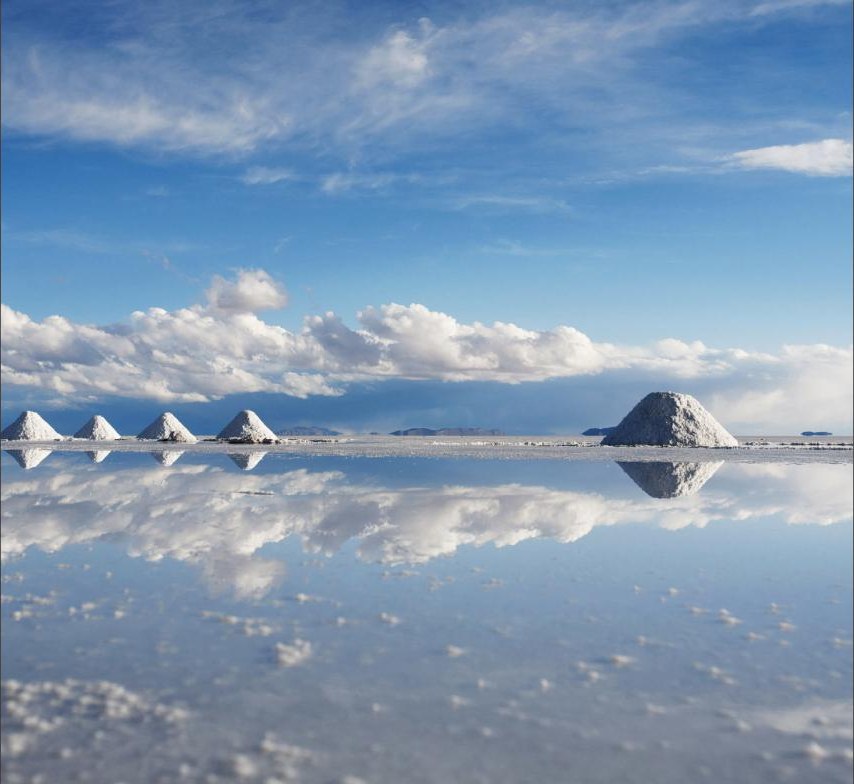
Assuming responsibility
Community agreement before the first works. Water produced, not taken. Energy from the sun.
Five commitments that did not exist before
No evaporation ponds
We do not depend on rebuilding what has already failed on the salar.
No fuels
100 % solar, off-grid. No diesel, no gas, no power grid.
Our own water
The plant produces its water from the brine. The surplus goes to the community.
15 % stays in Potosí
Of the private profits, reinvested in the department. It does not pass through the national treasury.
Agreement before building
Community agreement in assembly with Río Grande and CUPCONL before the first works.
Produced from the brine, not extracted from the territory
The water contained in the brine is sufficient for production. No additional process water is required, and no fresh water is drawn from the territory. What the process recovers beyond its own needs is made available to the surrounding communities.
200,000 litres per day of drinking water for Río Grande, guaranteed and free while the plant produces. Of the order of 3,150 m³/day remains available even in the pessimistic case, with a collection point at the plant open to all 53 communities of the territory.
Quality to Bolivian standard NB 512, with monthly analysis by an independent laboratory and results published in the community. Thirty days of storage on site: if the plant stops, supply continues by tanker. At closure the reservoir, treatment plant and distribution network pass to communal ownership.
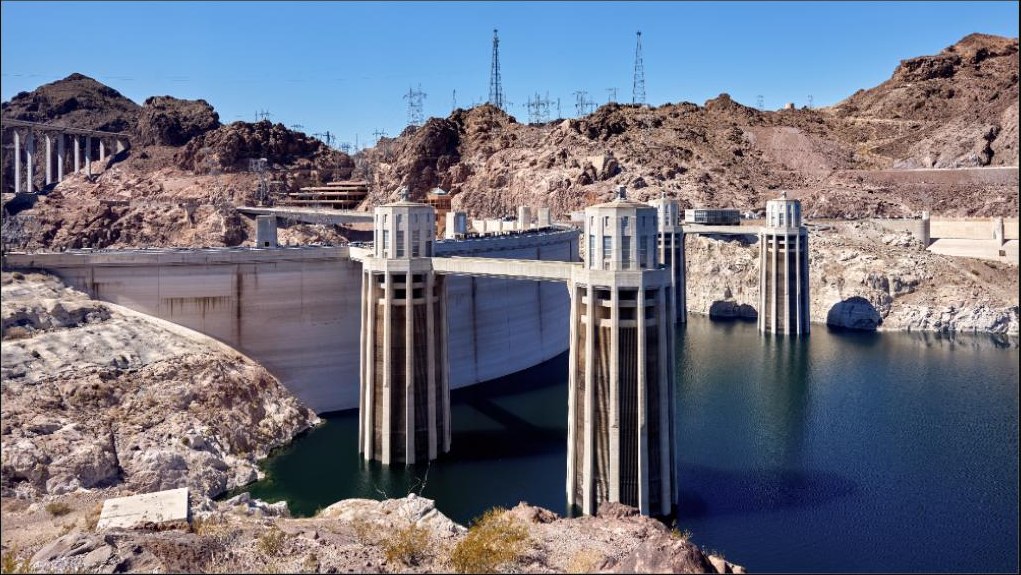
The same output, three approaches
Scaled to the same 80,000 t/y output, those intensities are 6.8 and 22.9 Mm³ per year against zero. Fresh water according to the technical annexes of the contracts in force (Red de Protección Ambiental / ANA 02-2025; CEDIB 04-2025). Brine excluded.
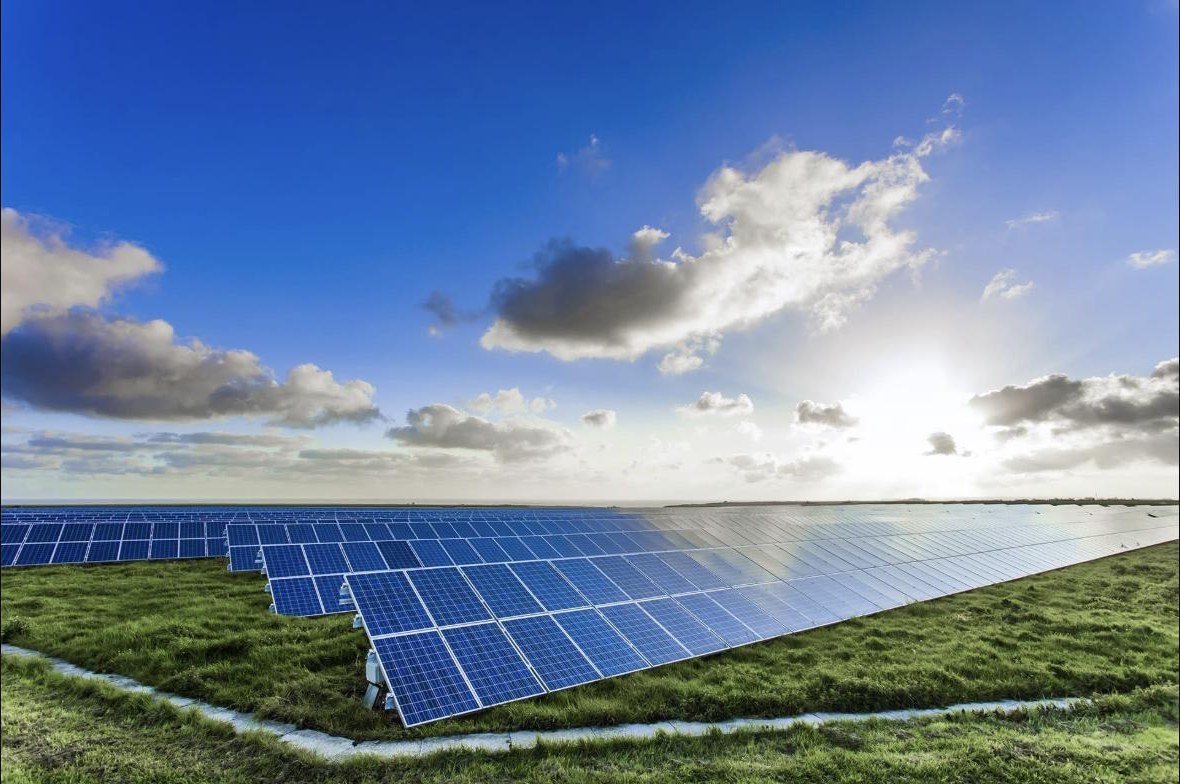
A plant that burns nothing
All the energy comes from the Altiplano sun. A photovoltaic field with battery storage supplies the electrical load; a solar-thermal field with molten-salt storage supplies process heat. The plant is off-grid by design — no diesel, no gas, no boilers, and no dependence on a regional supply that could not carry it in any case.
Magnesium and salt are returned responsibly to the salar. There are no evaporation ponds and no tailings dams, so there is nothing left behind that has to be maintained after the plant stops.
Four separate channels
None of them is deducted from another. The State's 51 %, taxes and royalties are Bolivia's in full and separately; everything below comes out of the private 49 %.
51 % participation
Plus taxes and royalties. The sponsor funds 100 % of the equity; Bolivia contributes no cash.
≈ US$40.5 M per year
15 % of the private shareholders' profits, reinvested in the department — about US$1.8 bn over the life of the project, ≈US$47 per Potosino per year, across 41 municipalities and the AIOC Jatun Ayllu Yura.
≈ US$5.7 M per year
To the title-holding territory in two channels, for the 53 communities, with the allocation decided by CUPCONL in assembly.
≈ US$2.95 M per year
For impact and land use, paid monthly while the plant produces, plus the water supply and a surface canon of US$250,000.
702 permanent jobs in operation
390 in operations on a four-shift roster, 187 in mechanical, electrical and instrumentation maintenance, and 125 in metallurgy, quality control, health and safety, laboratory and administration — alongside construction employment during the build.
Priority hiring for Río Grande and Nor Lípez, with training paid by the project and a departmental training fund so that Potosinos fill these positions. Rotation of about twelve cycles per year, with transport to Uyuni and Oruro.
Potosí decides
No work begins without an assembly minute from the Río Grande community and an assembly resolution from CUPCONL. Assemblies, not signatures. The whole process runs in Spanish, Quechua and Aymara.
Communities propose, prioritise and vote on what the fund finances — health posts, schools, water and irrigation, rural roads and electrification — through Decidimos, an app open to every comunario from any phone. Only a community’s own padrón can vote: the app holds a salted hash, never names. The ballot is secret by design, the accounts are open, and no money moves through the app.
ProposeAllocateVoteShareAccount
Decidimos is operated on the ground by CUPCONL, whose secretariat registers each community’s facilitator, loads the padrones and accompanies the assemblies — the app records what an assembly decides, it never decides for them. Every boliviano allocated, contracted and executed is published on a public portal, down to the invoice, with an annual independent audit.
Community environmental monitors, paid by the project, have site access and their data is public. If the project changes hands, the commitments transfer in full.
What remains when we finish
The land returns
Complete dismantling and remediation of the site, at the company's expense.
Guaranteed from year one
A closure fund constituted and deposited from the start — enforceable even if the company no longer exists.
The infrastructure stays
Water system, reservoir, distribution network, roads and buildings pass to Río Grande's ownership.
No environmental liabilities
No abandoned ponds. No tailings dams. No equipment rusting on the salar.
Figures from the project's techno-economic model, at an assumed price of US$15,000 per tonne of lithium carbonate.